

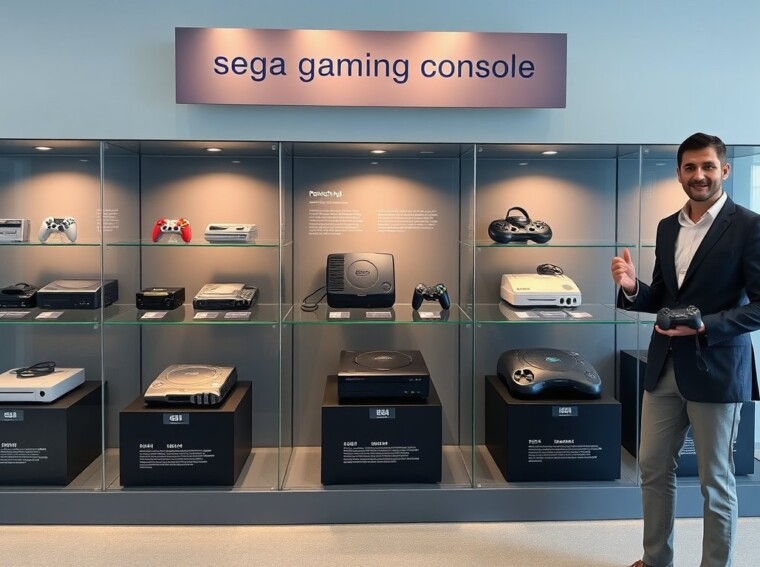
The Sega gaming console shaped many players’ childhoods and influenced game design. This guide lists key consoles, explains hardware advances, and shows why Sega matters today. It uses clear facts and dates. It aims to help collectors, players, and curious readers find reliable information about the Sega gaming console family.
Key Takeaways
- The Sega gaming console lineup, from the SG-1000 to the Dreamcast, played a pivotal role in shaping game design and player experiences with innovative hardware and strong game libraries.
- Sega consoles introduced significant hardware advances such as fast processors, cartridge formats, and online play that influenced the video game industry’s direction and player expectations.
- Despite commercial challenges like the Saturn’s high cost and the Dreamcast’s market exit, Sega’s consoles remain highly valued by collectors and enthusiasts for their rarity and historical impact.
- Sega’s approach demonstrated important lessons on balancing hardware innovation with developer accessibility, third-party support, and the critical role of software and pricing.
- The Sega gaming console legacy thrives today through retro gaming communities, collector markets, emulation efforts, and ongoing new releases inspired by classic Sega titles.
- Sega continues to impact modern gaming by inspiring developers, supporting remasters, and fostering nostalgia and curiosity in both players and scholars worldwide.
From SG-1000 To Dreamcast: A Concise Timeline Of Sega Consoles
The SG-1000 launched in 1983 and started Sega’s console journey. The company released the Master System in 1985 to compete with rivals in overseas markets. Sega introduced the Mega Drive in 1988 and named it Genesis in North America. The Genesis raised Sega’s profile with hits like Sonic the Hedgehog. Sega released the Sega CD add-on and the 32X in the early 1990s to extend the Genesis life.
The Saturn arrived in 1994 in Japan and in 1995 worldwide. The Saturn targeted 2D and 3D arcade-quality games. The Saturn faced supply limits and high cost. The Saturn sales lagged behind a main competitor and this affected Sega’s market share. Sega launched the Dreamcast in 1998 in Japan and in 1999 in other regions. The Dreamcast introduced online play for console games and a strong launch lineup.
The Dreamcast failed to maintain momentum by 2001. Sega stopped making new consoles and shifted to software development. The company continued to release arcade machines and games for other systems. Collectors now value many Sega consoles for rarity and historical impact. The phrase Sega gaming console refers to this full timeline from SG-1000 to Dreamcast. Scholars and fans study the Sega gaming console line for lessons in hardware design, marketing, and community building.
Iconic Hardware And Innovations That Defined Sega’s Approach
The Sega gaming console line showed a pattern of hardware risk and innovation. Sega used fast processors early. The Genesis used a Motorola CPU that gave developers more control over performance. The Genesis also used a simple cartridge format that lowered load times. The Genesis hardware helped Sonic run at higher speeds than many platformers.
Sega added hardware extensions to push graphics and sound. The Sega CD added a faster drive and CD audio. The 32X added more processing power for 3D. These additions aimed to extend the life of the Sega gaming console ecosystem without asking customers to buy entirely new machines.
The Saturn used dual CPUs and gave developers strong 2D capabilities. The Saturn architecture made some 3D development harder. Many studios built arcade ports on the Saturn because the hardware matched arcade boards. The Dreamcast shipped with a custom graphics chip and built-in modem. The modem made online play common for console racers and fighters. The Dreamcast supported indie-style development through simple tools and GD-ROM distribution. Sega supported experimental controllers and peripherals. The Sega gaming console family included light guns, arcade sticks, and motion accessories. These peripherals widened the kinds of games that designers could make.
Sega’s design choices taught the industry to weigh specialty hardware against developer accessibility. The Sega gaming console lineup left concrete lessons about compatibility, third-party support, and launch library quality. Hardware alone never guarantees success: Sega’s history shows that software, partners, and price matter too.
Why Sega Still Matters: Legacy, Collecting, And Modern Revival
Sega matters because its consoles changed how people play and how developers think about speed and arcade fidelity. Fans still play Genesis, Saturn, and Dreamcast titles. Retro groups preserve game code and create new ports. The phrase Sega gaming console appears often in collector listings and auction catalogs.
Collectors look for working units, controllers, and original boxes. Rare variants and limited bundles raise value. Fans trade region-specific releases and rare games. The collector market keeps the Sega gaming console legacy visible and funds restoration projects.
Sega also matters in modern development. Independent studios release remasters and new games that mimic Genesis and Dreamcast styles. Publishers reissue classic titles on modern platforms. Sega itself publishes new entries in long-running franchises and licenses its characters to others. These moves keep the Sega gaming console name in gamer conversations.
Emulation and legal re-releases let players test old games on new hardware. This access helps preservation and education. Museums and exhibitions display Sega consoles alongside development stories. Universities study Sega business choices as examples of brand pivoting and product lifecycle.
Fans gather online and at events to play classic titles, swap parts, and teach repair skills. These communities keep the Sega gaming console history alive. They also inspire young designers to study simple hardware limits and strong gameplay principles. The Sega gaming console legacy now blends nostalgia, active markets, and ongoing creative influence.