

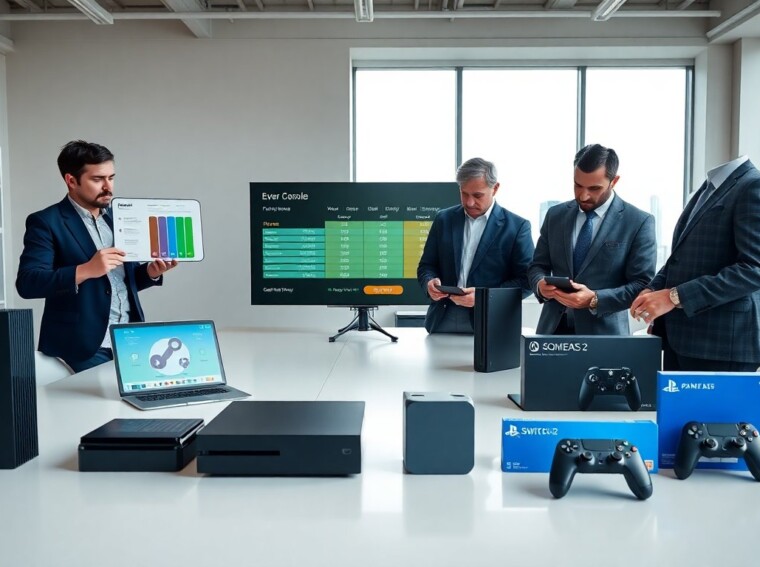
Every gaming console sits between performance, price, and game library in 2026. Players weigh graphics, exclusive games, and services when they decide. This guide lists current systems, compares console versus PC and cloud, and highlights likely upgrades. It gives clear facts and concrete choices so readers can match a system to their habits and budget.
Key Takeaways
- Every gaming console in 2026 balances performance, price, and exclusive game libraries to suit different player preferences.
- Sony’s PlayStation appeals to fans of cinematic single-player exclusives, while Microsoft’s Xbox attracts those valuing subscription services and backward compatibility.
- Nintendo’s Switch 2 caters to portability and family-friendly gaming, and options like Steam Deck target hardware flexibility and PC library access.
- Choosing between console, PC, and cloud gaming depends on budget, game type, performance needs, social play preferences, and portability.
- Backward compatibility is a major factor, with Microsoft and Sony providing strong support to preserve existing game libraries.
- Console evolution focuses on iterative upgrades, expanded indie ecosystems, and subscription models that enhance value and accessibility.
Current Console Landscape: Features, Strengths, And Who Each Fits
Sony, Microsoft, and Nintendo lead the market for every gaming console in 2026. Sony sells the PlayStation 5 and a mid-gen refresh that favors single-player exclusives and tight controller haptics. They focus on exclusive studios and cinematic single-player games. Microsoft markets the Xbox Series X
|
S and Game Pass. They favor backward compatibility, subscription value, and cloud streaming. Nintendo sells the Switch 2 with motion control and handheld focus. They favor family-friendly exclusives and portability.
Third-party manufacturers supply specialized hardware and retro-focused units that serve niche players. Steam Deck reaches players who want PC libraries in a handheld form. Valve updates the handheld hardware each cycle and they expand software support. ASUS and Razer deliver high-end hybrid units that target performance-first players.
Which player fits which console? Players who want exclusive single-player stories pick PlayStation. Players who want a large library and subscription value pick Xbox. Players who want local multiplayer and portability pick Nintendo. Players who want hardware flexibility pick PC or Steam Deck. This simple map helps readers match play style to system.
Every gaming console in this list supports online stores, account ecosystems, and frequent firmware updates. Each system offers different accessory ecosystems and storage options. Savvy buyers check storage price, controller cost, and subscription fees. They also check third-party game support and cross-play for multiplayer.
How To Choose Between Console, PC, And Cloud Gaming — A Practical Checklist
Buyers choose a platform by budget, game type, and convenience when they pick every gaming console option. They follow a short checklist to decide.
- Budget: Consoles offer fixed cost and lower upgrade cycles. PCs offer higher upfront cost and gradual upgrades. Cloud services offer low hardware cost but require steady broadband.
- Game library: Consoles provide curated exclusive games. PCs provide broader indie and mod scenes. Cloud services let players access libraries without local installs.
- Performance needs: PCs deliver the highest frame rates and visuals for the same price point at the high end. Consoles deliver predictable performance that matches most new releases. Cloud gaming delivers variable performance depending on network.
- Social play: Consoles favor local multiplayer and couch play. PCs favor competitive online play and keyboard/mouse control. Cloud gaming favors cross-device continuity and quick access.
- Portability: Handheld consoles and the Steam Deck offer true portability. Cloud gaming offers device-agnostic play but needs good internet.
They test network speed for cloud gaming before they commit. They compare subscription value for services like Game Pass, PlayStation Plus, and Nintendo Switch Online. They read reviews for controller feel and software updates. They check backward compatibility to reuse an existing library. They estimate long-term cost by adding subscription fees, storage upgrades, and extra controllers.
This checklist helps buyers reduce regret and choose a platform that matches their habits and budget. Every gaming console choice comes with trade-offs. The checklist clarifies those trade-offs.
What’s Next For Consoles: Upgrades, Backward Compatibility, And Indie Ecosystems
Manufacturers plan iterative upgrades for every gaming console as hardware cycles slow. They release performance revisions, new storage options, and tighter integration with cloud services. They push firmware updates that add quality-of-life features like faster suspend, expandable storage support, and cross-play toggles.
Backward compatibility remains a major focus for buyers who keep older libraries. Microsoft continues broad compatibility across generations. Sony expands selective backward support and enhances older titles with quality-of-life improvements. Nintendo prioritizes first-party backward options that fit their ecosystem.
Indie ecosystems grow on every gaming console through curated storefronts and targeted funding. Console makers launch programs that fund indie devs and streamline submission. They also improve dev tools and runtime performance so small teams release polished titles faster. Players see more creative, lower-priced games across platforms.
Cloud services and subscription models influence hardware choices. Manufacturers bundle subscription incentives to keep players in their ecosystem. They also test hybrid models that mix local play with cloud rendering to extend hardware life. This change lowers barriers for players who want immediate access to new titles without full hardware upgrades.
Accessory markets adapt to new hardware cycles. Third-party controllers, replacement batteries, and external SSDs see steady demand. Retailers stock adapter and audio solutions that help older accessories work with new consoles.
Overall, players should expect steady upgrades and stronger backward compatibility on most platforms. They should also expect more indie titles and subscription options to shape value. Every gaming console will keep evolving in ways that affect cost, library, and convenience.