

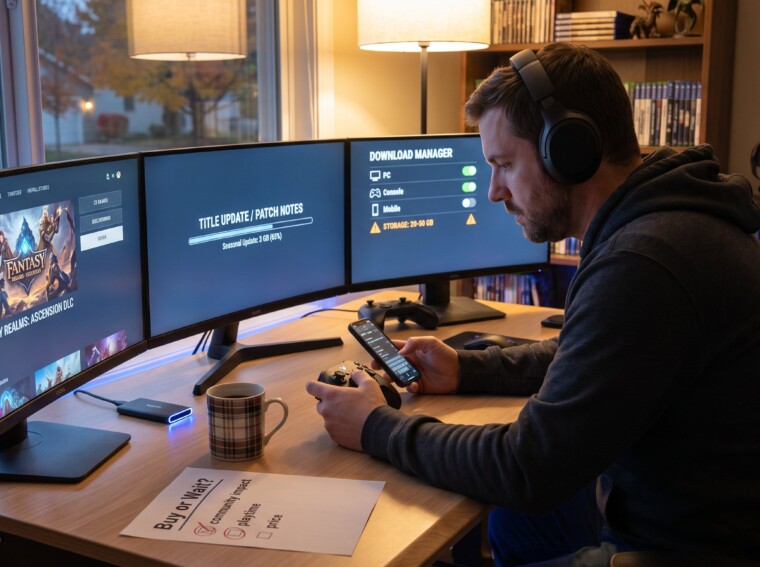
How Downloadable Content Differs from Free Content Updates matters to every gamer who tracks post-launch roadmaps. In 2026 the line between paid expansions and free title updates is thinner than ever, and players must judge scope, technical impact, and community effects before they spend. This article explains the practical differences, why developers pick one route over the other, and how those choices change the player experience across PC, console, and mobile.
Key Takeaways
- Downloadable Content (DLC) is typically optional, often paid, and offers substantial new content like story expansions or maps, while free content updates deliver required bug fixes, balance changes, and minor features to all players.
- Free updates unify the player base by keeping everyone on the same game version, whereas paid DLC can fragment communities by gating multiplayer content behind purchases.
- Developers choose DLC to generate direct revenue through premium experiences and expansions, while free updates focus on maintaining game health, community retention, and balanced matchmaking.
- Players should buy DLC when it adds significant new gameplay they will use extensively and wait for free updates for smaller fixes or events, always checking patch notes and store tags before purchasing.
- Different platforms handle content uniquely: PC and consoles mix paid DLC with free patches, while mobile games emphasize frequent free updates plus in-app purchases resembling DLC.
- Coordinating purchases within gaming groups and staying informed via trusted patch trackers helps avoid mismatched content and ensures a synchronized multiplayer experience.
How DLC And Free Content Updates Differ At A Glance
Fact first: DLC is typically optional, often sold separately: free content updates are pushed to all owners and are usually required for online play. That difference affects purchase decisions, matchmaking, and the baseline feature set for everyone.
DLC (downloadable content) usually appears in a store listing as an add-on. It can be a paid expansion, a smaller paid pack, or occasionally a free add-on marketed as DLC. Examples include new story chapters, playable characters, and large map expansions. Free content updates, by contrast, arrive as patches or title updates. They fix bugs, tweak balance, add seasonal events, or roll out minor features that keep the live game stable for everyone.
Why this matters: optional DLC lets developers create premium experiences and sustain long-term revenue. Free updates maintain the game’s health and reduce fragmentation. Players who value a complete synchronized experience should expect free updates: players who want new paid stories or cosmetic rarity should look at DLC.
Scope, Size, And Technical Delivery: What Changes Look Like
Answer first: scope and delivery separate DLC from updates, DLC can be multi-gigabyte expansions with separate install logic: free updates usually alter the base build and are often smaller incremental patches.
DLC scope: large DLC often contains new levels, cinematics, voice work, and separate multiplayer maps. A single expansion can add tens of gigabytes, require separate installation, and sometimes ship as a distinct package in digital stores. Technical delivery for DLC can mean separate content IDs, optional installs, and storefront metadata that marks the item as purchasable.
Free update scope: most free updates contain bug fixes, performance improvements, balance patches, and short-term events. These deliverables integrate into the base game build and frequently require everyone to update before joining online sessions. A developer may push a 200 MB hotfix one week and a 3 GB seasonal update the next: both remain part of the main build.
Practical warning: large DLC can fragment player pools when maps or modes are gated, while required updates unify the install base but can break mods or third-party tools. For players tracking release sizes and compatibility, the guide on how to track releases explains timelines and platform differences in detail: release tracking resources.
Business Models And Monetization: Why Developers Choose DLC Or Free Updates
Core insight: developers choose paid DLC when they need direct revenue: they push free updates when community health or retention is the priority.
Paid DLC models: studios sell expansions, season passes, and cosmetic packs to recoup development costs and fund new content. Historically, paid DLC financed large single-player expansions and persistent-world growth. For example, studios selling season passes often promise future paid chapters and exclusive items. Paid DLC invites buyers to fund ambitious additions, new story arcs that require full production teams and licensing for voice actors.
Free updates strategy: free updates build goodwill, reduce churn, and keep the matchmade player base consistent. Publishers may release balance changes, new events, or anti-cheat improvements for free to avoid splitting communities. Some companies pair free updates with paid DLC, core gameplay remains free to update while premium narrative or cosmetic content is sold.
Real-world tension: when monetization blurs with gameplay, players react. In recent years, coverage of paid versus free splits has influenced PR and sales decisions, pushing some publishers to publicly define what stays free and what will be charged. That debate echoes across threads about updates and monetization, and deeper context appears in TheGameArchives’ pillar on updates: updates primer.
Player Experience And Community Impact
Direct claim: free updates tend to unify communities: paid DLC can fragment them if multiplayer content is gated behind purchases.
How communities change: when a multiplayer map is part of paid DLC, only buyers can access it, creating separate lobbies and smaller match pools. That happened in the past with map-pack models where some players could not join DLC-only lobbies, and matchmaking times rose. Free updates avoid this by keeping all players on the same build and same pools.
Benefits of paid DLC for community members: paid expansions often deliver richer narratives and high-effort content that many fans value. A guild or squad that buys a new raid together gets a shared premium experience. But, the risk is social friction, players without the DLC might miss craft systems, progression gates, or cosmetic trends, which affects trading and social status within games.
Practical tip: guild leaders should standardize purchases if they want synchronized content access. Community moderators must communicate which add-ons are required for events to avoid last-minute no-shows.
Examples And Case Studies From PC, Console, And Mobile Games
Key point: different platforms show different patterns, PC and console often use a mix of paid expansions and free patches: mobile skews toward frequent free updates plus in-app purchases.
PC/console case: a major AAA RPG might ship a 30–40 hour paid expansion while also receiving free balance patches and seasonal events. Some recent live-service titles define which features are free and which require payment, clarifying the split for players. That approach helps players decide whether to purchase expansions or wait for free content. For a clear example of developers defining free vs paid splits, see reporting on how teams communicated monetization choices in Destiny 2: monetization policy coverage.
Mobile case: mobile developers ship weekly free updates with events and bug fixes while monetizing cosmetics and convenience items through in-app purchases. The store architecture on mobile makes DLC-style sales fluid: players buy small packs inside the app, which behave like DLC but are implemented as IAPs and server-side entitlements.
Notable example: when a publisher pairs a large paid expansion with a simultaneous free 2.0 upgrade, players get a clear separation of content tiers, one for the paying audience and another for the entire install base. That pattern was visible in recent multi-part releases covered broadly by outlets tracking combined free and paid drops.
How players can use this: inspect patch notes and store pages to tell whether new content is an integrated update or a separate purchasable item. For step-by-step tracking, theGameArchives offers a beginner-friendly primer on early access and update behavior: early access guide.
How To Decide As A Player: When To Buy DLC And When To Wait For Free Updates
Answer up front: buy DLC when it adds substantial, lasting content you will use: wait when the update only promises fixes, small features, or unclear gating.
Decision checklist:
- Content depth: if the DLC adds 10+ hours of story, new systems, or unique multiplayer modes it may be worth purchasing. Quantify this by reading previews and developer breakdowns.
- Community impact: if guild events or matchmaking require the add-on, consider buying to stay synchronized.
- Technical risk: wait if early reports show major bugs or server issues after release, patches often follow within days.
- Value per dollar: compare the DLC’s content size and replayability to the price. A cosmetic pack may not justify purchase unless the player values rarity or status.
Warning from experience: players sometimes mistake limited-time free events for permanent free content. Check patch notes to confirm whether an event is a permanent update or a limited free offering. For advice on how updates can change gameplay and performance, consult theGameArchives piece on updates that alter gameplay: performance and gameplay.
Final practical move: if unsure, wait one patch cycle, developers usually fix day-one issues and clarify what remains paid versus free.
How To Decide As A Player: When To Buy DLC And When To Wait For Free Updates
Note: This H3 mirrors the decision guide above and gives a quick checklist players can act on immediately.
Quick checklist (75–100 words):
- Expect free updates for bug fixes and balance. Wait for these.
- Buy DLC if it adds major story, maps, or systems you will play for 10+ hours.
- Watch community hubs and patch notes for required purchases before events.
- If price or reviews are unclear, delay purchase one update cycle.
This short decision flow helps players avoid buyer’s remorse and keeps groups coordinated.
Additional Notes On Platform Differences
Additional fact: consoles often require separate store approvals for DLC, which can delay releases compared to PC. Mobile updates can roll out regionally and use server flags to enable content without a new client download.
Practical numbers: a DLC expansion might require 20–50 GB on modern consoles, while a seasonal free update could be 1–5 GB. Players with limited storage should check pre-download notices and uninstall old demos or unused titles before adding expansions.
How To Decide As A Player: When To Buy DLC And When To Wait For Free Updates — Quick Example
Concrete scenario: a squad plans a weekend raid. Developer announces a paid raid DLC and a free balance update the same week. If only the raid is paid, the squad must purchase the DLC or skip the event. If the raid is part of a free patch, everyone can join without buying. That real situation underlines why checking patch notes and store tags matters.
How To Decide As A Player: Final Practical Tips
Last practical tips: follow trusted patch-note aggregators, watch small streamers for first impressions, and lean on guild consensus for purchases. Small, concrete steps save time and money: wait one week after release to avoid day-one bugs and confirm whether content truly adds the promised hours or systems.
Platform Tracking And Release Tools
Useful resource: players who want a structured tracking approach should use release-tracking tools and theGameArchives’ how-to for cross-platform release dates. That resource helps players schedule buys and sync group purchases efficiently: release trackers.
Developer Communication And Transparency
Short point: transparent roadmaps reduce confusion. When developers publish clear lists of free versus paid content, players can plan purchases and avoid fragmentation. Community backlash often follows when the split is unclear or shifts after promises are made.
Emerging Trends In 2026
Trend insight: hybrid rollouts, where a major paid expansion launches alongside a free quality-of-life 2.0 update, are more common. Publishers use this to satisfy both paying fans and the broader player base. Coverage of similar hybrid releases helped frame this trend in 2025 and 2026.
Further Reading And Sources
Selective citation: reporting on publishers redefining free versus paid content provides evidence for the business trade-offs discussed above. For industry reporting on DLC tipping points and platform differences, see contemporary coverage from major outlets and community trackers.
Practical Checklist: What To Do This Week
Immediate actions: review game patch notes before buying, confirm whether required content is free or paid, and coordinate purchases with teammates. These steps prevent mismatched installs and smoother play sessions.
Appendix: Storage And Bandwidth Considerations
Storage note: plan for 20–50 GB for large expansions on consoles: mobile updates are smaller but frequent. Bandwidth-sensitive players should enable background downloads and stagger installs to avoid weekend congestion.
Community Reaction Monitoring
Monitoring tip: watch community forums in the first 72 hours after release for bug reports and compatibility notes. That window often reveals whether a paid expansion needs hotfixes or whether a free update changed matchmaking unexpectedly.
How DLC And Free Updates Affect Competitive Play
Competitive note: esports scenes typically require standardized builds. Tournament organizers usually forbid paid-only maps or modes to keep competition fair, which means free updates carry extra weight for competitive integrity.
When Monetization Crosses Into Gameplay
Caution: monetization that affects core gameplay, pay-to-win mechanics, can fracture both casual and competitive communities quickly. Players should prioritize transparency and community response when evaluating long-term support for a title.
Closing Example
Closing example: a 2024 title released a paid expansion and a simultaneous free UI overhaul. Players praised the free overhaul but debated the price of the expansion. That mixed reception illustrates the trade-offs developers balance when splitting content between paid and free channels.
Summary
Short summary: paid DLC adds optional, often large content: free updates deliver required fixes and inclusive features. Players should read patch notes, check store tags, and coordinate with their communities before buying.
Endnotes
Endnote: balance decisions and platform policies will continue to shape how content is split. Staying informed via patch notes and trusted outlets helps players make better choices.
Related Guides
Related reading: for specifics on early access update behavior and why updates sometimes change gameplay, consult theGameArchives resources listed earlier. These guides show practical ways players can track and respond to post-launch changes.
External Verification
External reporting has documented publisher shifts toward hybrid free/paid models. For coverage of a notable DLC moment and community reaction, readers can reference contemporary reporting by outlets that follow platform and publisher moves.
Meta
Meta note: keep theGameArchives’ updates pillar bookmarked to follow future changes in how DLC and free updates are delivered and marketed.
Author Note
Author insight: developers often learn from early community feedback: players benefit when they wait a short period after release to buy into a new paid expansion unless they need instant access for social reasons.
Closing Link
For systematic tracking of updates, patches, and release notes across platforms, readers should consult theGameArchives’ comprehensive guide: patches overview.
Citation
This article synthesizes observed patterns from studio roadmaps, reporting, and community response. Players who want step-by-step tracking tools can follow theGameArchives resources linked above.
Acknowledgements
Thanks to community moderators and patch-note aggregators whose early reports reveal which updates are paid and which are free.
Final Practical Reminder
Final reminder: always check the store listing and patch notes before purchasing new content to confirm whether it is paid DLC or a free update.
Next Steps
Next steps: subscribe to trusted patch trackers, coordinate purchases with your group, and read community early impressions before spending on expansions.
Conclusion
Insight: DLC and free content updates both extend games, but they serve different purposes. DLC often funds and expands a game with optional paid content: free updates sustain the live game, fix problems, and keep player pools stable. By reading patch notes, checking store tags, and coordinating with teammates, players can make smarter buy-or-wait decisions that suit their playstyle and wallet.