

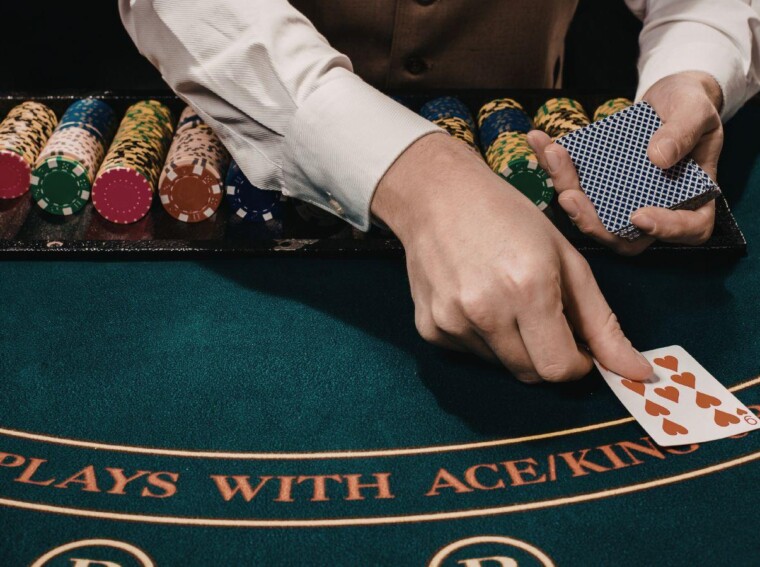
There is a version of heads up poker advice that reduces the format to aggression. Play more hands. Raise more often. Apply pressure. The advice is not wrong in the way that a flat earth is wrong — it points at something real — but it describes the output of correct heads up thinking without explaining the input, and the gap between those two things is where most players lose money. The Spinight App offers heads up formats across variants and table configurations — the conditions in which poker heads up strategy gets evaluated not by what sounds correct at a remove, but by what happens across hundreds of hands against a single opponent who is adjusting to everything you do. Understanding heads up poker rules, the structural differences that separate heads up from full-ring play, and where the real decisions in this format actually sit is more useful than any aggression-first heuristic applied without context.
What Heads Up Poker Is Actually Testing
The how to play heads up poker conversation tends to focus on hand selection and aggression frequency. These matter. They are not the primary skill being tested across a session of meaningful length.
Poker heads up is testing three things simultaneously: your ability to construct an accurate model of one specific opponent, your ability to update that model as new information arrives, and your ability to exploit the model without becoming predictable in the process. Hand selection and aggression are downstream of this. A player who raises aggressively against an opponent who never folds is not playing correct heads up poker — they are applying a population-level heuristic to a sample size of one.
|
Heads Up Skill Layer |
What It Covers |
Where Most Players Fall Short |
|
Opponent modelling |
Identifying tendencies, leaks, patterns |
Relying on general reads instead of observed data |
|
Model updating |
Adjusting as opponent adapts |
Anchoring to first impression |
|
Exploitation without telegraphing |
Applying pressure without becoming readable |
Over-adjusting, creating new leaks |
|
Range construction |
Building balanced and exploitative ranges |
Playing too face-up or too randomly |
This is the foundational distinction that separates useful heads up poker analysis from the version that fills most beginner guides. A player who executes the aggression instruction correctly but cannot adjust when the opponent stops folding has not learned how to play heads up poker. They have learned one response to one opponent type and mistaken it for strategy.
Heads Up Poker Rules: What Changes from Full-Ring and Why It Matters
Before evaluating any heads up strategy, the structural rule changes that govern poker heads up deserve explicit treatment, because several of them invert intuitions developed in full-ring or six-max play.
The button posts the small blind and acts first pre-flop. In full-ring poker, the button acts last pre-flop and last post-flop — it is the most powerful position at the table. In heads up, the button posts the small blind and is forced to act first before the flop, then reverts to acting last on every subsequent street. This split structure — positional disadvantage pre-flop, positional advantage post-flop — makes the button simultaneously the weaker position before cards are dealt and the stronger position after.
The big blind, by contrast, acts last pre-flop and first on every subsequent street. This is the mirror image of the button’s situation: advantage before the flop, disadvantage on every street that follows.
|
Position |
Pre-Flop Action |
Post-Flop Action |
Net Positional Value |
|
Button (Small Blind) |
Acts first |
Acts last |
Positive — post-flop advantage outweighs |
|
Big Blind |
Acts last |
Acts first |
Negative — post-flop disadvantage is persistent |
The practical implication of heads up poker rules on position is that the button should be playing a wider range overall, and the big blind should be defending wider than full-ring intuition suggests — but with awareness that every street after the flop will be played out of position. Defending wide and playing well out of position are different skills. The first is a rule adjustment. The second is a competence requirement.
Starting Hand Ranges in Heads Up Poker: What the Two-Player Format Does to Hand Values
Hand values in poker heads up are not scaled-down versions of their full-ring equivalents. They are restructured. Understanding how to play heads up poker at a competent level requires internalising why hands that are marginal in a nine-handed game become standard opens — and why some hands that are strong in full-ring play lose relative value in heads up.
In a nine-player game, a hand like K7o is a fold from most positions. The field of nine opponents means the probability that at least one holds a dominating hand is significant. In heads up, the relevant comparison is one opponent’s random hand. K7o is in the top 40% of all starting hands. It is not a premium holding. It is a hand that should be played.
The threshold shift applies across the range. Pairs that would be set-mining candidates in full-ring play — small pocket pairs — are strong heads up holdings. Suited connectors gain value from their equity against a single opponent’s range. Dominated hands — K3o, Q6s — that are automatic folds multi-way become borderline playable in heads up contexts.
|
Hand Category |
Full-Ring Assessment |
Heads Up Assessment |
Reason for Shift |
|
Small pocket pairs (22–55) |
Set-mine or fold |
Strong — high relative value |
Only one opponent to beat |
|
Weak kings (K2–K7o) |
Fold most positions |
Playable from button |
Top 35–40% of hands |
|
Suited connectors (54s–87s) |
Speculative |
Valuable — equity runs well |
Better realisation vs single range |
|
Dominated aces (A2–A5o) |
Fold |
Standard open |
Ahead of majority of opponent hands |
The correct read on this restructuring is not that all hands become playable. It is that the threshold for playing shifts significantly downward, and players who import their full-ring folding ranges into heads up play are surrendering equity on every hand they fold incorrectly.
How to Play Heads Up Poker Post-Flop: Where the Format Is Actually Won and Lost
Pre-flop range construction in poker heads up is learnable from charts and equity calculators. Post-flop heads up play is where the format resists reduction to a table and demands something closer to real-time judgment.
The post-flop dynamic in heads up is defined by two features that interact with each other: the persistence of positional disadvantage for the big blind, and the high frequency with which neither player connects meaningfully with the flop. In a heads up pot, both players miss the flop — in the sense of not flopping a pair or better — a significant proportion of the time. The question of who wins uncontested pots is largely a question of who applies credible pressure more consistently and more selectively.
The continuation bet — a bet made by the pre-flop aggressor on the flop — is the primary mechanism through which this pressure is applied. In full-ring poker, continuation bet frequency is constrained by the number of players in the pot and the likelihood that at least one has connected with the board. In heads up, the single-opponent structure makes continuation betting viable at a higher frequency, but this creates its own problem: an opponent who recognises a high continuation bet frequency will begin floating — calling with the intention of taking the pot away on the turn — or raising with air.
The correct continuation bet frequency in heads up is not maximal. It is calibrated to what the specific opponent will do with calls. Against an opponent who folds to continuation bets at a high rate, frequency should increase. Against an opponent who floats or raises liberally, range selectivity on the flop matters more than frequency.
Opponent Modelling: The Skill That Heads Up Poker Rewards Above Everything Else
The difference between poker heads up and comparison formats — the instant-feedback, mechanically resolved games found at plinko Australia platforms, for instance — is that heads up poker contains an adversary who is simultaneously trying to model you while you model them. The adaptation layer does not exist in games of pure chance. It is the defining feature of the heads up format.
Opponent modelling in heads up poker operates across three timescales: the hand, the session, and the meta-game.
At the hand level, the relevant information is betting patterns on specific board textures — does the opponent bet large on wet boards with made hands only, or do they barrel bluffs at the same sizing? Does a check on the turn signal weakness or trapping? Single-hand reads are unreliable in isolation but accumulate into patterns.
At the session level, tendencies become visible. An opponent who folds to three-bets at a high rate in the first orbit may adjust in the second. An opponent who calls wide pre-flop but gives up frequently post-flop is a different problem than one who calls wide and realises equity aggressively. The session-level model should be updated continuously, not fixed at first impression.
At the meta-game level — across multiple sessions against the same opponent — history becomes a strategic asset. An opponent who remembers that you bluffed a specific runout in a previous session will adjust their calling frequency on similar boards. The meta-game model runs in both directions.
|
Modelling Timescale |
Information Source |
Update Frequency |
|
Hand level |
Current betting patterns, sizings |
Each action |
|
Session level |
Tendencies across multiple hands |
Each orbit |
|
Meta-game |
History across sessions |
Each session |
Heads Up Poker Rules on Betting and Structure: What the Format Assumes You Already Know
Heads up poker rules on betting structure are identical to full-ring rules — the same street sequence, the same betting round mechanics, the same showdown procedure. What changes is the strategic context in which those rules operate.
The blinds in heads up post at a higher frequency relative to stack depth than in any other format. In a nine-player game, a player posts the big blind once every nine hands. In heads up, every hand involves posting either the small or the big blind. The rake — or, in a casino setting, the time charge — is therefore extracted from the players at a higher effective rate per hand. This makes the blind structure in heads up more expensive relative to stack size than the same structure in a full-ring game, and it makes folding pre-flop — which returns zero from the blind already posted — more costly per orbit.
The ante structure in some heads up formats — particularly in tournament late stages — accelerates this further. A button ante, posted by the button each hand, adds to the pot without requiring a call, increasing the incentive to contest pots aggressively rather than surrender them unplayed.
|
Structural Feature |
Full-Ring Effect |
Heads Up Effect |
|
Blind posting frequency |
Once every 9 hands each |
Every hand, alternating |
|
Effective cost per orbit |
Predictable, spaced |
High — both blinds posted per two hands |
|
Ante structures |
Distributed across players |
Concentrated — increases pot-to-stack ratio |
|
Rake extraction rate |
Per hand, distributed |
Per hand, concentrated on two players |
Common Errors in How to Play Heads Up Poker and What They Cost
|
Error |
Mechanical Description |
Strategic Cost |
|
Importing full-ring fold ranges |
Folding hands in top 40% |
Surrendering pot equity repeatedly |
|
Fixed continuation bet frequency |
Betting regardless of opponent response |
Opponent exploits with floats and raises |
|
Ignoring positional disadvantage post-flop |
Playing out of position passively |
Losing pots that should be contested |
|
Anchoring to first-impression reads |
Not updating opponent model |
Playing against a model that no longer applies |
|
Over-bluffing an opponent who never folds |
Applying pressure indiscriminately |
Turning profitable bluffs into money-losing ones |
|
Under-bluffing an opponent who always folds |
Not applying pressure when it works |
Leaving significant equity on the table |
Each error in this table is recoverable in isolation. A pattern across a session is a signal that the player is not observing the opponent — they are executing a predetermined plan against an abstract opponent type rather than the specific person across the table.
Heads Up Poker in Tournament Contexts: How the Rules Shift When Stacks Are Finite
Tournament heads up — the final two players competing for the title — introduces stack pressure that cash game heads up does not contain. When stacks are measured in fifteen to twenty big blinds, the pre-flop decision becomes the dominant decision in the hand. Post-flop play collapses into a smaller proportion of hands as shove-or-fold ranges expand to cover most holdings.
The practical implication of short-stack heads up poker rules is that the ranges that are correct in a fifty-big-blind cash game heads up situation are not correct in a fifteen-big-blind tournament situation. Players who study heads up in one stack depth and apply the lessons in the other are solving the wrong problem.
|
Stack Depth |
Pre-Flop Dynamic |
Post-Flop Complexity |
Primary Skill Tested |
|
100+ big blinds |
Wide ranges, three-bet games |
High — multiple streets of decisions |
Post-flop reading and adjustment |
|
50 big blinds |
Moderate shove frequency |
Medium |
Range construction, three-bet dynamics |
|
15–25 big blinds |
Shove/fold dominates |
Low — few post-flop hands |
Shove range accuracy, ICM awareness |
|
Under 10 big blinds |
Near-complete shove/fold |
Minimal |
Mathematical push/fold execution |
The transition between these stack depth regimes is gradual, not binary. A player moving from thirty to twenty big blinds does not flip a switch — they shift incrementally toward a shove-or-fold framework as the number of hands where post-flop play is viable shrinks.
The Practical Framework for Improving at Heads Up Poker
The question of how to play heads up poker has a short honest answer and a longer practical one.
The short answer: heads up is the format that most directly exposes individual skill. The variance that protects a weaker player in a full-ring game — the distribution of action across nine players, the dilution of individual matchups — is absent. You are playing one opponent, and the results reflect that matchup more directly than any other format.
The practical framework:
Review sessions with attention to opponent model accuracy. The question is not whether you won or lost — it is whether your reads were correct, and if not, what data you failed to weight correctly. An opponent who surprised you consistently in a session is an opponent whose tendencies you failed to identify. The review identifies which tendencies those were.
Separate pre-flop range leaks from post-flop execution errors. A player who folds too much pre-flop and a player who plays too many hands but executes well post-flop have different problems requiring different corrections. Conflating the two produces unfocused study.
Play enough volume at a single stack depth before moving between depths. The skills required at one hundred big blinds and at twenty big blinds overlap structurally but differ significantly in application. Developing genuine competence at one depth before transitioning is more efficient than attempting to develop both simultaneously.
Study opponent tendencies before adjusting your own range. The adjustment sequence in heads up is: observe, model, exploit. Players who adjust their own range before completing the modelling step are optimising against a model they have not yet validated.
Verdict
Heads up poker, honestly framed, is not primarily a question about aggression or hand selection. It is a question about information — gathering it accurately, updating it continuously, and converting it into decisions that exploit one specific opponent without becoming exploitable in the process.
The heads up poker rules that govern the format are simple. The structural adjustments that distinguish it from full-ring play are learnable. The skill that separates players who win consistently from players who apply correct general principles and still lose is the ability to treat every session as a live data collection exercise about one person, and to act on that data before it becomes obsolete.
The opponent across the table is adjusting. The player who adjusts faster, more accurately, and with better calibration to what the specific adjustments should be — not the generic ones, but the ones warranted by this opponent, in this session, at this stack depth — is the player who wins. Everything else is preparation for that.
