

The phrase “oldest gaming console” identifies the earliest devices that delivered electronic play in homes. Historians trace these devices to lab experiments and simple commercial kits. This guide lists key machines, explains the early market claims, and shows how collectors date and preserve the oldest gaming console hardware.
Key Takeaways
- The oldest gaming console title often goes to the Magnavox Odyssey, released in 1972 as the first commercial home console.
- Early gaming consoles evolved from experimental electronic devices and electromechanical games developed between the 1940s and 1960s.
- Collectors and museums use serial numbers, manufacturers’ records, and component codes to authenticate and date the oldest gaming consoles.
- Preserving the oldest gaming consoles involves careful cleaning, stabilizing electronics, climate-controlled storage, and maintaining original accessories for historical value.
- The debate over the oldest gaming console includes criteria like commercial availability and cartridge use, with the Fairchild Channel F (1976) noted as the first cartridge-based system.
- Museums educate visitors by displaying consoles alongside original packaging, advertisements, and historical context to illustrate the evolution of early home gaming.
Earliest Electronic Games And Precursor Devices (1940s–1960s)
Researchers often call the earliest devices experimental computers. They built simple interactive displays in the 1940s and 1950s. Scientists created cathode-ray tube games for lab use. They used oscilloscopes and analog circuits to show moving dots. Engineers tested human interaction on these displays. In the 1950s, universities ran programs that let users play pattern games. They wrote logic that responded to player input.
Companies introduced coin-op and arcade prototypes next. Developers built electromechanical games in the 1960s. These games used relays, lights, and motors to simulate play. Engineers released light-gun-style demos at trade shows. This hardware influenced later home machines. Researchers built simple hobby kits that hobbyists could assemble at home. Hobby kits used transistors and early integrated circuits.
Designers created the first digital home consoles in prototype form by the mid-1960s. These prototypes used discrete components and simple game rules. Inventors combined video displays with user controls in wooden cabinets. They tested versions that displayed two-player games. Engineers experimented with variable graphics and scorekeeping. Historians mark these devices as direct precursors to the oldest gaming console models sold to consumers.
The First Commercial Home Consoles: Magnavox Odyssey, Competing Systems, And The ‘Oldest’ Claim
Collectors and writers often name the Magnavox Odyssey as the oldest gaming console sold for home use. Magnavox shipped the Odyssey in 1972. The company marketed it as an electronic game console that worked with a standard television. The Odyssey used discrete logic and lacked a microprocessor. The system included plastic overlays for the TV screen and simple controllers.
Other companies released home consoles around the same time. Philco and Atari produced early units that they sold in the early 1970s. Engineers at Atari released Pong arcade versions first. They later adapted Pong for home use. Competitors offered dedicated game machines that played only a few built-in titles. These devices used chipsets known as game-on-a-chip designs.
Historians debate the title “oldest gaming console.” Some researchers require a commercial sale date. Others require a system to use interchangeable cartridges. The Odyssey meets the commercial-sale test. The Fairchild Channel F, released in 1976, introduced removable cartridges. Tech writers call the Fairchild Channel F the first cartridge-based console. Collectors hence split on whether the oldest gaming console should mean the first sold unit or the first unit with game media. Both views hold merit.
Writers also consider regional releases. Companies sold similar hardware in Europe and Japan at different dates. These staggered dates complicate the oldest gaming console claim. Museum curators hence list multiple key machines when they describe early home gaming history.
Identifying, Dating, And Preserving The Oldest Consoles For Collectors And Museums
Collectors use serial numbers and manufacturing labels to identify the oldest gaming console units. They inspect circuit boards for date codes and part numbers. They compare these codes with company records and trade catalogs. Museums cross-check product catalogs and contemporary press reports to confirm release dates. Archivists photograph hardware and document provenance. They log acquisition records and ownership history.
Conservators stabilize electronics with simple steps. They remove batteries and test capacitors for leakage. They clean contacts with isopropyl alcohol and a soft brush. They avoid power-up attempts on unknown boards. They consult specialists for component replacement. They catalog original controllers, manuals, and packaging. These items add value and context for the oldest gaming console exhibits.
Collectors store units in climate-controlled spaces. They keep humidity low and temperatures steady. They use acid-free boxes for paper items. They wrap consoles in breathable material to prevent condensation. They label each item with a clear accession number. They digitize manuals and run preservation copies of software where license law allows.
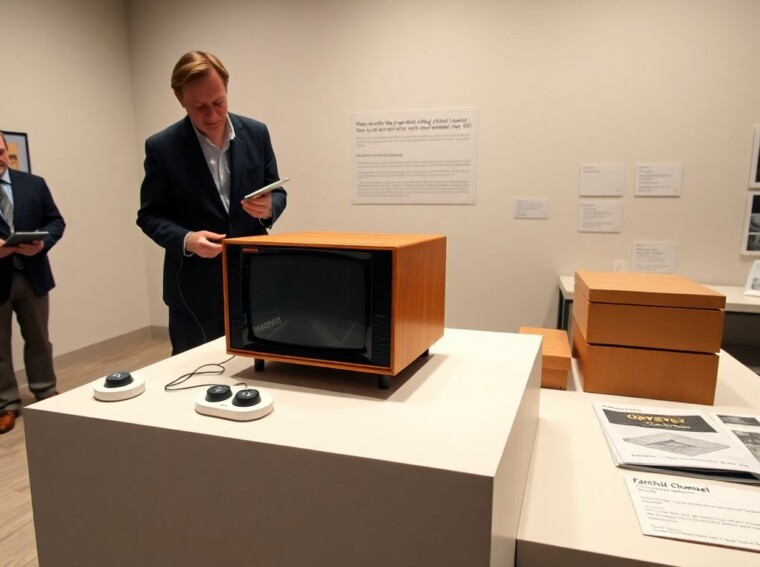
Museums create displays that educate visitors. Curators explain technical limits and the social context of early gaming. They show the device, the original packaging, and advertisements. They include period photographs and testimonials from engineers. These materials let visitors see why experts call certain models the oldest gaming console. Curators also lend items to scholars for research. They document loans and coordinate restoration work with conservators to keep the hardware usable for study.