

From the dusty saloons of Red Dead Redemption 2 to the neon-drenched casinos of Fallout: New Vegas, minigames offer a welcome break from the main quest. They’re more than just a quick way to earn in-game currency; they’re a core part of the world-building. But when you sit down at a virtual card table, are you playing the same game you’d find in a real-world casino? The answer is a little more complex than you might think, and it reveals a lot about both game design and real-world strategy.
It’s easy to assume the blackjack table in Saint Denis is just a reskinned version of the real thing. But developers often tweak the rules to better fit the game’s balance and economy.
More Than Just a Diversion: The Rules of the Digital Table
At first glance, the goal is the same: get closer to 21 than the dealer without going over. You can hit, stand, double down, and sometimes split your cards. These are the fundamentals, and they are almost always present. However, the devil is in the details, and these small changes can have a big impact on the game’s odds. If you want to see exactly how much they matter, plug the rule set into a house edge calculator and watch how a tiny tweak can shift the percentage against you.
For instance, a key difference is the number of decks used. A real casino might use a “shoe” of six or eight decks. In a video game, the number is often ambiguous or simplified to a single deck that is digitally “reshuffled” after every single hand. This completely eliminates the possibility of card counting, a famous advantage play strategy. Another common change is the payout for a “natural” blackjack (an Ace and a 10-value card). The traditional payout is 3:2, but many digital versions, like their modern real-world counterparts, may pay a less favorable 6:5, and a house edge calculator makes the impact of that downgrade obvious in seconds.
But it’s not just the table rules that are different. In the world of an RPG, the most important variable is you, the player.
When “Luck” is a Stat: How RPG Mechanics Change the Game
This is where video game blackjack truly diverges from reality. Take Fallout: New Vegas. Your character’s S.P.E.C.I.A.L. stats directly influence gameplay, and the casinos of the Mojave Wasteland are no exception. A high Luck stat fundamentally alters the odds in your favor. As detailed by the community on the Fallout Wiki, a Luck of 10 gives you a roughly +13% chance of winning any given hand, an enormous swing that no real-world player could ever achieve legally.
This RPG mechanic turns the game on its head. A decision that would be statistically terrible in a real game, like hitting on a 19, might just pay off if your character is unnaturally lucky. It’s a brilliant piece of game design that rewards players for investing in a specific character build, but it’s a far cry from a pure game of chance and skill.
So, if the rules and even the player’s core attributes are different, what does that do to the underlying math? A lot, as it turns out.
What This Means for Your Strategy (and the House Edge)
In any casino game, the “house edge” is the built-in mathematical advantage the house has over the player. In standard blackjack with good rules, this edge is less than 1% for a player using perfect basic strategy. However, every rule change shifts that number. Even a single tweak, like the dealer hitting on a soft 17, can alter the house’s advantage.
For gamers curious about calculating the odds in these unique scenarios, it becomes a fascinating puzzle of reverse-engineering the developer’s intent. The simplified rules in many video games are often designed to make the game faster and easier to understand, a core principle in good minigame design. This creates a unique learning environment. You’re not just playing blackjack; you’re playing a specific version of it, one tailored for a virtual world. Understanding why a certain move is good or bad in that context is a lesson in probability itself.
Despite these differences, the time spent at these virtual tables isn’t wasted. It can actually build a solid foundation for understanding the real game.
From Virtual Saloons to Real-World Skills
Playing blackjack in a game like Red Dead Redemption 2 offers a risk-free training ground. You can learn the flow of the game, memorize the card values, and get a feel for basic decision-making without wagering a single real dollar. Many of the minigames found in RDR2 serve this purpose, teaching players poker, dominoes, and five-finger fillet in an immersive way.
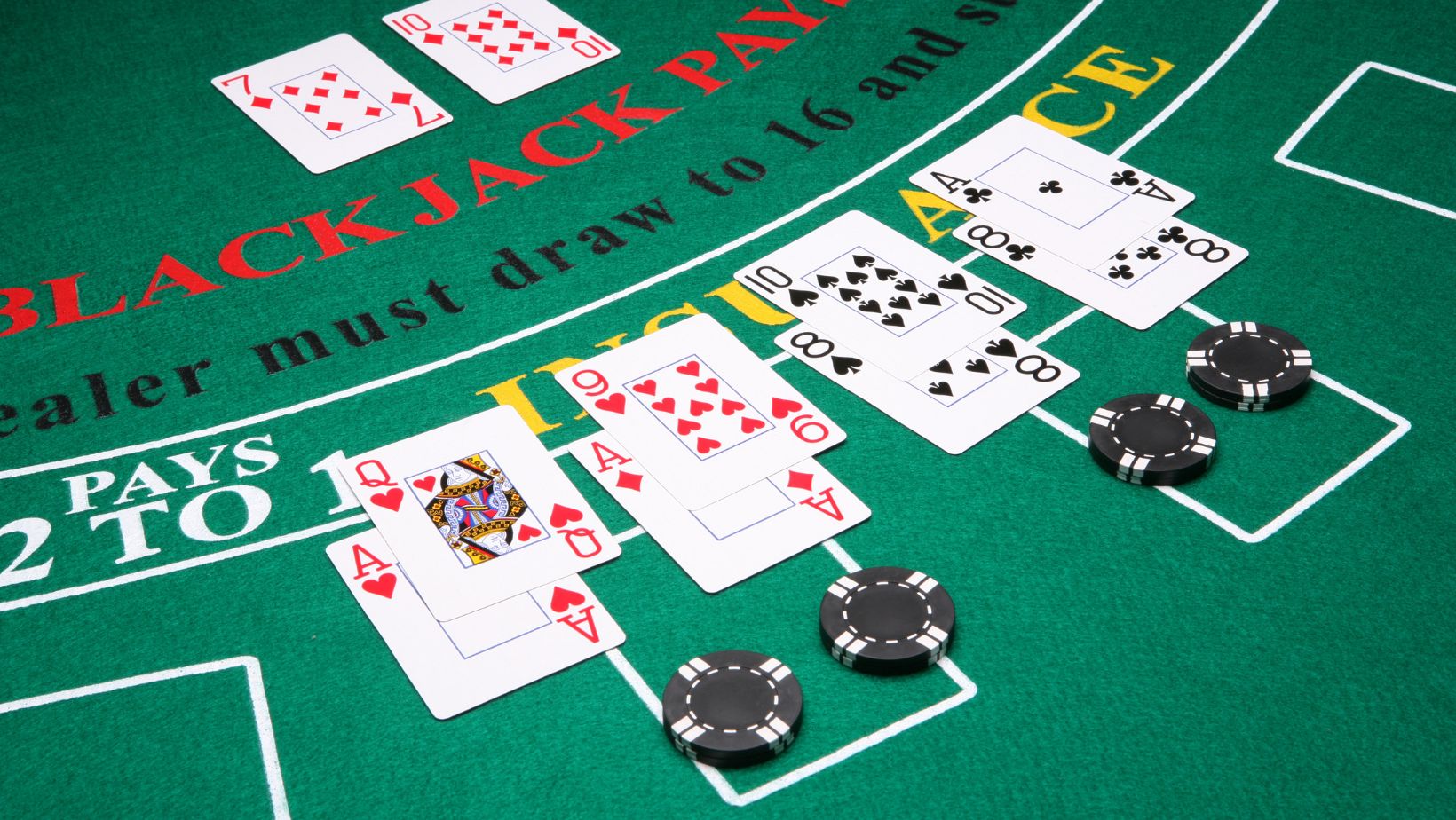
You learn the core objective isn’t just to get 21 but to beat the dealer’s hand. You can practice when to hit, when to stand, and when to double down, forming the bedrock of what’s known as “basic strategy.” While the specific odds might be different from a Las Vegas casino, the fundamental logic behind your decisions often remains the same. You’re building strategic muscle memory in a fun, consequence-free setting.
FAQs
Is the “basic strategy” for real blackjack useful in video games?
Mostly, yes. The fundamental principles of when to hit or stand based on your hand and the dealer’s upcard still apply and will improve your chances.
Do video game blackjack minigames use a real shuffle?
No, they use a Random Number Generator (RNG) to simulate a shuffle. In most games, this RNG effectively “reshuffles” the deck after every single hand.
Can you count cards in games like Red Dead Redemption 2?
No. Because the digital deck is typically reshuffled after every hand, there is no “memory” of which cards have been played.
Why do developers change the rules of blackjack for their games?
Developers alter the rules for several reasons: to simplify the game for a broader audience, to speed up gameplay so it doesn’t distract from the main story, and to balance the in-game economy.