

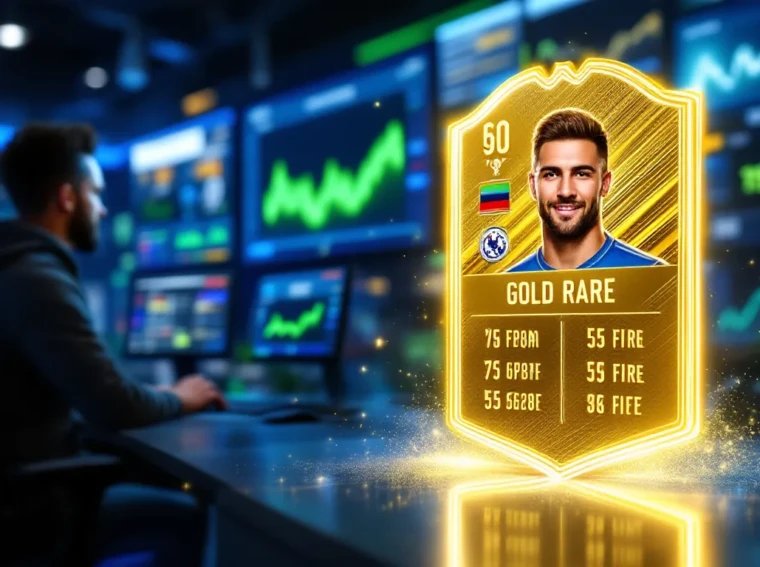
FIFA cards are the backbone of Ultimate Team mode, and whether you’re spinning your first gold pack or grinding toward a full meta squad, understanding how they work separates casual players from competitive hunters. The FIFA card system isn’t just about pulling rare players, it’s a layer cake of mechanics involving chemistry, positioning, pricing trends, and timing that directly impacts your team’s on-pitch performance and your account’s profitability. This guide walks you through everything: from basic card mechanics and starter squad builds to advanced trading strategies and competitive rank climbing. By the end, you’ll have a framework for making smarter FIFA trading card decisions and building a team that actually works, not just looks flashy on paper.
Key Takeaways
- FIFA cards function as a complex economic system where rarity, chemistry links, and market timing directly impact both team performance and your account profitability.
- Building a competitive squad starts with understanding chemistry mechanics—players sharing nationality, league, or club receive stat boosts that can swing close matches.
- Smart FIFA card trading follows predictable cycles: buy underpriced cards during market dips (post-promo crashes, patch days), hold strategically, and sell during hype peaks for 30-40% returns.
- Squad Battles and Division Rivals offer reliable passive income (30K-50K+ monthly) without requiring pack openings, making consistent grinding more profitable than chasing packs.
- Master meta formations like 4-2-3-1 and identify position-specific stat priorities (high pace for fullbacks, strong shooting for strikers) to avoid expensive card mismatches.
- Avoid emotional attachment to cards—treat each FIFA card as a market asset with a clear entry price, hold period, and exit strategy rather than a permanent squad fixture.
What Are FIFA Cards and How Do They Work?
Card Types and Rarity Tiers
Every player in Ultimate Team exists as a card with a specific rarity designation that directly impacts their attributes, market price, and availability. At the bottom tier, Bronze Cards are cheap and plentiful, useful for squad building challenges (SBCs) and budget hybrids, but rarely make your starting eleven. Silver Cards sit in the middle: better stats than Bronze, still affordable, and surprisingly useful in early-game squad building. The real action happens with Gold Cards, which represent players from major leagues and tier-1 clubs, these are your core building blocks.
Rarity matters more than base overall rating. A Rare Gold card (indicated by a shiny border) costs substantially more than a Non-Rare Gold of the same player because rarity affects card weight in pack odds. Within Gold, you’ve got regular cards, then special editions: Inform cards (Team of the Week variants with boosted stats), Promo Cards (released during events like Summer Heat or Ultimate Team Heroes), Team of the Season variants, and Iconic cards that commemorate legendary moments. Special promos like Hero cards or Path to Glory editions command premium prices because of their limited availability and stat boosts.
The visual design tells you everything instantly: card color (Bronze/Silver/Gold), border style (Rare vs. Non-Rare), badge positioning (nation, league, club), and special foiling indicates event exclusivity.
Stats, Chemistry, and Team Building Mechanics
Every FIFA soccer card displays six core attributes: Pace (acceleration and sprint speed), Shooting (accuracy, power, and finishing), Passing (short pass, long pass accuracy), Dribbling (agility and ball control), Defense (marking and slide tackle), and Physical (strength and stamina). These stats directly determine how your players perform in matches, a striker with 94 Shooting will finish more clinical chances than one with 70, all else being equal.
But raw stats alone don’t win matches. Chemistry is the hidden multiplier. When players share a nationality, play in the same league, or are part of the same club, they get chemistry boosts. A full chemistry squad (typically 100 chem or close to it) receives stat bonuses across the board, sometimes +5 to key attributes depending on position. A mismatched squad with 45 chemistry, by contrast, loses those bonuses and plays like it has no cohesion.
Link types matter: Strong Links come from same club, same nation+league combo. Weak Links are nation-only or league-only. No Link means zero chemistry between those two players, which you sometimes accept for a single game-changing player. Advanced players build hybrid squads, mixing leagues and nations strategically, to fit 5-7 key players while maintaining chain links that boost everyone.
Position also affects chemistry. A Chemistry Style (consumable card you apply to a player) boosts specific attributes: Hunter boosts Pace and Shooting, Shadow adds Pace and Defense, Catalyst emphasizes Passing. You apply these tactically based on your formation and play style, defensive fullbacks usually get Shadow or Anchor, attacking midfielders get Hunter or Catalyst.
Getting Started: Building Your First Squad
Budget-Friendly Starter Teams for New Players
Your opening kit is about 5,000-15,000 coins, often from starter packs and squad battle rewards. Don’t panic-buy meta cards yet. Instead, focus on building a functional 11 using cards that share chemistry links. A safe structure: pick one major league (Premier League, La Liga, Bundesliga, or Serie A), stick to it, and buy players from clubs with strong link potential.
A realistic first-week squad might look like this: a GK and two fullbacks from the same club (immediate chem), a defender trio mixing that club with one from a partner league position, two midfielders from your chosen league (one offensive, one defensive), and three strikers/wingers to rotate and experiment. Total cost: around 8,000 coins if you avoid the brand-name players like Harry Kane or Kylian Mbappé.
Consider building a hybrid starter squad once you understand basics: mixing two leagues or nations to squeeze in one premium player surrounded by cheaper budget fillers. This takes planning but rewards you with one strong performer without blowing your entire budget.
Always keep 1,000-2,000 coins in reserve for consumables (contracts, fitness cards, healing cards) or emergency upgrades. Nothing’s worse than running out of gas mid-season because you bought eight players and forgot maintenance items exist.
Essential Players and Position Priorities
Prioritize your goalkeeper and three defenders first, defensive solidity stops you from bleeding goals. Then build your midfield (balance defensive cover with attacking threat), then forwards. This pyramid prevents you from having a Cristiano Ronaldo-led attack backed by a championship-Sunday pub team defense.
When picking positions, understand roles: a Striker (ST) needs high Shooting and Physical stats: a Winger (LW/RW) needs Pace and Dribbling: a Center Midfielder (CM) balances Passing and Defense: a Left/Right Back (LB/RB) requires Pace and Defense above all else. A Center Back (CB) should have Physical, Defense, and ideally decent Pace so they’re not left for dead on counters.
Target players with 80+ base stats in their relevant attributes. A 78-rated winger with 92 Pace and 86 Dribbling outperforms an 82-rated winger with 74 Pace and 70 Dribbling. Read the card, don’t just read the number in the corner.
Avoid big-name trap cards, expensive icons or high-rated players that don’t fit your formation. A 1,500-coin player in the right position beats a 10,000-coin out-of-position “upgrade.” Position flexibility comes later when you have coins to experiment.
Acquiring Cards: Trading, Packs, and Earning In-Game Currency
The Transfer Market and Smart Trading Strategies
The Transfer Market is your stock exchange. Buy low, sell high, classic trading applies here. New players often panic-sell fresh pack pulls, tanking prices temporarily. Experienced traders buy those dips, hold for a few hours, and flip them for 5-10% profit. Multiply that across 20 trades daily and your coin stack explodes.
Small trading wins compound fast. Scan the market for players priced slightly below their average selling price (cross-check current listings), snag them, list them 200-500 coins higher, and move on. Repeat with different positions and leagues. This method requires patience and no emotional attachment, you’re moving inventory, not building your dream squad.
Larger trades involve mass bidding: buying multiple identical cards at low prices during market crashes (patch releases, major events, content droughts when players panic), storing them, and selling when demand spikes. For example, buying 50 copies of a 1,250-coin Silver midfielder when nobody cares, then selling them at 1,800 coins when that league gets a promo card that triggers SBC demand.
Avoid “investment” cards that never gain value: 78-79 rated non-rare golds, discard-value players from inactive leagues. Stick to meta players, popular league cards, and cards that feature in recurring SBCs.
Timing matters. Price peaks happen right after promos drop (when demand surges), then slowly decline. Buy early in a promo window when supply is low, sell mid-promo when peak demand hits. Plan trades around the calendar: international breaks, league cup weekends, and major esports events all shift demand.
Pack Types and Expected Value
Packs exist in dozens of varieties, but they share one truth: the house always wins. A typical Premium Gold Pack (50K coins, 24 players) has an expected value under 40K, you’re mathematically losing coins long-term. That said, packs exist for excitement and for chasing specific promos.
Here’s the hierarchy:
- Starter Packs (early game, low coin cost): terrible expected value, fine for learning the rarity tiers
- Bronze/Silver Packs (fast rotation, cheap): value for SBC grinding and specific silver league demands
- Premium Gold Packs (standard, 50K): base-level gamble, slightly better odds than standard packs
- Jumbo Premium Packs (75K+, 24+ players): marginally better EV than Premium, still loses coins
- Promo Packs (limited time, during events): vary wildly: some with team-of-the-week players have inflated cost
- Guaranteed Player Packs (themed SBCs, event exclusives): often excellent EV if you need those specific cards
The math: unless you’re chasing a specific promo card for an SBC or a one-time icon pull, your coins go further buying cards off the market than spinning packs. Most players open packs for dopamine, not profit, respect that, but don’t pretend it’s strategic investing.
Earning Coins and Free-to-Play Methods
Squad Battles are your primary grinding tool. Play offline matches against AI squads, earn coins and rewards proportional to difficulty. Four games daily yields roughly 1,500-2,500 coins if you win on Professional difficulty. It’s passive, requires zero stress, and compounds to 30K+ coins weekly without touching the market.
Division Rivals matches yield coins based on placement (Division 1 ranks earn more than Division 6). Rewards distribute on Fridays, and if you hit Elite or higher, coins pour in. This requires actual skill but pays better than Squad Battles if you’re competitive.
Weekend League hasn’t returned in 2026 in standard form, but its spiritual successor offers substantial coin rewards for high finishes. Grinding to 20+ wins nets between 20K-50K coins depending on your division rank.
SBCs (Squad Building Challenges) are one-time coin sinks paired with reward payouts. Basic SBCs yield 500-2,000 coins plus packs: major milestone SBCs reward player cards or promo packs worth selling. Plan SBCs strategically around market prices, buy players cheap, complete the SBC, sell rewards, net a profit or at least break even.
Daily challenges, milestones, and season pass rewards trickle in coins slowly, don’t count on them as primary income, but never skip them. Over a month, these yield 15K-25K in bonus coins.
Free-to-play? Entirely viable. You’ll build a competitive squad slower, but millions of players do it. Patience beats impatience: grinding Squad Battles monthly beats panic-pack pulls.
Advanced Squad Building: Chemistry, Formations, and Meta Tactics
Understanding Chemistry Links and Chem Styles
Maximizing chemistry is about pathways, not just raw numbers. Imagine chemistry flowing like electricity through your squad: each player on the pitch connects to neighbors, and those connections amplify stats. A center midfielder with 2 green links (full chemistry connections to adjacent players) gets full stat boosts. That same midfielder with 0 green links gets zero boosts, acting as a dead node in your electrical circuit.
Build for chemistry first, then tactical flexibility. Most competitive squads hit 99-100 chemistry because those final boosts matter, they can swing close matches. A Shadow chemistry style on a fullback adds +5 Pace and +10 Defense: across your entire back line, that’s a difference between getting nutmegged and shutting down an opponent’s winger.
Advanced link-building involves position modifiers. A player naturally plays RB, but you can apply a position change card to make him a RM (Right Midfielder). This opens chemistry paths otherwise impossible. A top-tier fullback moved to midfield creates links to strikers and central midfielders, unlocking new squad archetypes.
Chem styles are consumable cards applied to individual players, permanent until you remove them. Core styles: Hunter (Pace + Shooting, for strikers), Shadow (Pace + Defense, for fullbacks), Catalyst (Pace + Passing, for playmakers), Anchor (Defense + Physical, for center-backs). Lesser-used ones exist for niche roles, but these four cover 80% of squads.
Don’t waste chem styles on bench players or role mismatches. A striker without Hunter is leaving free stats on the table: a fullback without Shadow is vulnerable to pace-abusing wingers.
Current Meta Formations and Playstyles
Meta shifts every season, but certain formations remain competitive. The 4-2-3-1 (two defensive midfielders, one playmaker behind two wingers and a striker) balances defense and attack. It’s forgiving for new players and scales to elite play. The 4-3-2-1 sacrifices a midfielder for a second striker, pushing attacking pressure. The 5-2-2-1 or 5-3-2 emphasize defensive solidity, less exciting but wins games for defensive-minded players.
Wing-based systems (4-2-3-1, 4-1-4-1 with wingers) dominate because pace wingers create space. The meta revolves around fullbacks who can play as wingers, center backs with high Pace (to recover when your fullbacks push high), and holding midfielders with good positioning (to sit between your defenders during attacks).
Strike partnerships matter. Two strikers (4-3-2-1 formation) allow one to hold play while the other makes runs, this year’s meta favors this over lone striker setups because it creates numerical superiority in attack. Look for strikers with good weak foot (4-5 stars minimum) and complementary stats: one with high strength and finishing, the other with high agility and dribbling.
Playmaking midfielders define tempo. A CM with 85+ Passing and Dribbling becomes a press-breaker, allowing your team to transition quickly. Defensive mids need high Defensive stats and Positioning to intercept through balls, they’re your screen.
In-game tactics (depth, width, aggression) interact with formations. The meta often sits at 5-6 depth (defensive), 6 width (balanced wing play), and 4-5 aggression (controlled pressure without overcommitting). Adjust based on opponent behavior, but these starting points work.
Special Card Events and Limited-Time Promotions
Team of the Week, Promos, and Player Events
Team of the Week (TOTW) drops every Wednesday and includes 23 players who performed well in real-world matches that weekend. These cards are rare, priced higher than their base versions, and highly sought after by collectors and squad builders. The market floods with TOTW cards Wednesday-Friday, then prices climb mid-week as pack odds drop. Buy TOTW cards Thursday-Friday if you’re chasing specific ones: sell them the following Wednesday when new TOTW drops and collectors rotate.
Promo events run year-round: Team of the Season (TOTS) (May-June, featuring the year’s best players from each league), Ultimate Team Heroes (summer legends), Path to Glory (knockout tournament players), Festival of Football (themed events with stat boosts), and others. Each promo reimagines popular players with inflated stats, special visuals, and limited availability.
During promos, market prices of related cards spike. A Bundesliga promo means Bundesliga cards everywhere cost more because SBCs demand them. Smart traders buy off-league cards during these windows, Premier League players get cheaper when Bundesliga is the focus, then flip them later.
Special individual events (“Festival of Football” moments, Milestone Cards celebrating player milestones like “50 goals for club”) drop periodically with special stat lines. These create short-term market chaos as players chase their favorite athletes. The chaos passes, but you can profit by identifying undervalued cards before events peak.
Promo predictions: watch the calendar. International breaks often mean calm markets. Major esports events spike demand. League cup weekends shift focus. Calendar-watching beats speculation.
Seasonal Content and Battle Pass Rewards
Seasons run 4 weeks and introduce battle pass tracks (free and paid tiers). The free track rewards coins, packs, consumables, and occasionally tradeable player cards. The premium battle pass (usually 1,000 FUT Points, roughly $10) adds reward-dense tiers with more cards and coins. Completing the free pass nets 15K-25K coins: the paid pass doubles rewards.
Milestone rewards drop periodically within seasons, hit 10 Rivals wins, earn a reward: hit 20 Squad Battles wins, earn another. These compound: a dedicated player hitting milestones every week earnings 30K+ bonus coins per season beyond normal match rewards.
Seasonal objectives (“Win with a Spanish formation,” “Score with a CAM”) reward cosmetics (squad theme cards, player customizations) and tradeable cards. Seasonal cards are often juiced with stats, a 78-rated seasonal card might have the stats of an 81-rated normal card, making them bargains for SBCs.
Seasons reset every month, introducing new content and meta shifts. Each reset shuffles the market, old meta cards depreciate, new promo cards release, and prices reset. Use resets as trading windows: sell end-of-season cards before reset crashes their value, then buy cheap in the new season.
Competitive Play: Ultimate Team Seasons and Ranked Modes
Division Rivals and Weekend League Structure
Division Rivals is the competitive ranked ladder, where you earn points through online matches, climb divisions (10 down to 1), and receive rewards based on weekly placement. Climb to Rank 1 Division 1, and your rewards include 2,000+ coins, rare player packs, and promo cards. Rank 1 Division 5 earns substantially less. This creates incentive for improving, better players = better rewards.
Division Rivals awards cards and packs from the current promo, incentivizing elite players to grind weekly. A player sitting Rank 1 Div 1 receives a guaranteed special card from the current Team of the Week or promo, often worth 30K+ coins. Non-elite players still earn solid payouts, Rank 2 Div 5 yields 12K+ coins and a promo pack.
Weekend League as a standalone event was phased out, but seasonal championships and mid-season tournaments replaced it. These special modes run limited windows (Friday-Monday typically) and reward players based on wins achieved. Win 20 matches, earn 50K coins plus premium packs. Win 15, earn 30K. The structure incentivizes participation and skill improvement.
Squad Battles rank separately from competitive modes and pit you against AI squads of varying difficulty (Professional to Ultimate). Winning on Ultimate difficulty yields 500+ coins per match: Professional yields 300+. Four matches daily = passive income. Squad Battles lack competitive prestige but offer zero-stress coin grinding.
Rewards, Ranking Up, and Climbing the Ladder
Division promotions require promotion points (usually 1,100-1,400 points). Win matches, earn points: lose matches, lose fewer points (typically 2:1 ratio). The system pushes you toward a skill equilibrium: you’ll stabilize at a division where you win roughly 50% of matches.
Each division has multiple ranks within it (Rank 1, 2, 3). Rank 1 is harder to hit but pays better. An average player hitting Rank 2 Division 5 every week = 12K coins + packs. A competitive player hitting Rank 1 Division 2 = 35K+ coins + premium cards. Over a season, top players earn 2-3x the rewards.
Promo cards from competitive rewards are game-changers. A 92-rated TOTS player from Division Rivals rewards saves you 400K+ coins versus buying it off the market. This creates a virtuous cycle: better players earn better cards, upgrade faster, and maintain their advantage.
Weekly planning matters. Jump into Rivals Thursday-Sunday when stakes feel fresh: if you’re climbing, grind during your peak mental hours. Take losses objectively, no tilting, no emotion-selling your best players. Consistent play beats hot streaks.
Matchmaking is skill-based (SBMM). You’ll face opponents at your skill level once you stabilize. This means winning becomes harder as you rank up, that’s the design. Expect 40-60% win rates at your true skill level: anything outside that range indicates you’re pushing beyond your current ceiling or smurfing down.
Maximizing Your Card Value: Investment and Long-Term Strategy
Predicting Price Movements and Market Trends
Card prices follow seasons, events, and supply cycles. A player released in a promo Friday costs 50K. Sunday, he’s 35K (supply flooded, collectors have him). Wednesday, he’s 28K (hype died). Following Wednesday’s TOTW drop, he crashes to 22K (old news). Friday’s new promo release brings him back to 42K if it’s remotely relevant. Chart this pattern, and you’ll predict prices accurately.
Factory-fresh cards (newly released) are overpriced. Patience wins. Wait 4-5 days, buy at 30-40% discounts. This applies to every promo: Team of the Season, Heroes, Path to Glory, seasonal cards. New = expensive. Old = cheap. Buy old, rebrand (apply chemistry styles, link to your team), and enjoy.
Demand cycles are predictable. Specific leagues spike during their league events (La Liga promo = La Liga cards expensive). Position spikes happen during SBCs requiring that position (need 3 CBs for an SBC = CB prices spike). Nationality spikes happen during international events or icon SBCs (Spanish icon SBC = Spanish players expensive).
Market crashes happen predictably: patch day (meta shifts, players adjust), new season (resets the economy), major esports events (players quit for weeks). Buy aggressive during crashes: sell peak during hype.
Watch social media and esports coverage. If a professional player’s squad goes viral using a 50K midfielder, that card triples in price within days. Catch trends early: buy before the viral moment, sell during peak hype.
When to Buy, Sell, and Hold Your Best Assets
Sell peaks happen predictably: right after promos drop (hype peak), right before reset events (players cashing out), during major streamers’ “squad-building” content drops (demand surges). Watch prices live: list your cards when they spike.
Buy valleys happen during: dead periods (no events, no promos, everyone’s quiet), post-promo crashes (3-4 days after promo ends), weekday mornings (lower traffic, fewer buyers driving prices up), new season launches (chaos shifts focus, old cards depreciate).
Hold periods apply to: cards from current promos (hold 3-4 weeks before reselling), highly-used meta players (always bounce back to baseline value), icon or legend cards (supply dries up, floor price stabilizes). Don’t panic-sell during temporary dips: hold through the cycle.
Bench players and depth cards: sell immediately. You don’t need three ST backups: sell two, reinvest those coins. Your squad’s value compounds through reinvestment, not hoarding.
Don’t get attached. A card is an asset. When it peaks, sell. When it crashes, buy. Emotional attachment costs coins.
Portfolio diversification: don’t hold your entire liquid worth in one player. Own a mix of meta players (stable value), promo players (volatile but explosive gains), and consumables (steady demand). This spreads risk and ensures liquidity.
Timing your megadeals: if you’re selling your main squad to upgrade, sell during promotional peaks (not valleys). Your entire squad appreciates, your selling price per card jumps 10-15%, and your reinvestment coins multiply. Patience = millions.
Common Mistakes to Avoid and Pro Tips for Success
Budget Management and Avoiding Impulse Purchases
The biggest mistake: opening packs when tempted. Resist it. That shiny promo pack feeling is a sunk cost once you click “buy.” The coins you spend on packs could’ve been invested in specific cards, which multiply faster. A 50K pack pays out 30-35K average: those coins applied strategically (buying underpriced cards, holding, reselling) yield 60-70K within a week.
Set a monthly budget and stick to it. Allocate: 50% toward squad upgrades, 30% toward trading reserves, 20% toward experiments/packs (if you must). This prevents you from liquidating your entire team chasing one new card.
Don’t upgrade constantly. A 5K coin improvement (trading a 78-rated for an 81-rated) feels good but wastes time. Batch upgrades: save 20K, then upgrade 3-4 positions simultaneously. You’ll notice the difference: single-position tweaks feel invisible.
Avoid position-changing desperation. A striker out of position plays like a striker out of position, no matter the chemistry style. Build formations around your players, not the opposite.
Forgot about “shiny syndrome.” Just because a player has a special card doesn’t mean he’s better than his base card. A 91-rated TOTS with worse stats than an 88-rated base card costs 5x more. Cross-check attributes: stats > rarity.
Never chase losses. Lost 5K on a bad trade? Don’t revenge-spend 20K trying to make it back. Accept small losses, move on. Emotion ruins trading accounts.
Optimization Tricks Used by Top Players
Top players leverage market inefficiencies. A player released Friday sees prices Friday (peak hype), Saturday (still high), Sunday (dropping), Monday (fair value), Tuesday (cheap). Casual players buy Friday: pros buy Monday. Same card, 30% price difference.
They use squad rotation strategically. Rather than playing 11 identical players every match, they rotate squads: one squad for Division Rivals (max meta), one for Squad Battles (all-untradeable rewards), one for fun experiments. This prevents “squad fatigue” and optimizes coin-per-match efficiency.
They stack consumables before events. Knowing a nation is about to get a promo? Buy 200 fitness cards for that nationality beforehand. When the promo hits, players buying new squads also need consumables, resell at 2-3x cost.
They SBC flip obsessively. Buy players cheap, complete an SBC for a promo pack, sell the pack reward to recoup coins plus profit. Repeatable SBCs yield consistent returns if you execute constantly. It’s grinding, but it compounds.
They watch patch notes religiously. A patch buffing a midfielder’s Shooting? Buy him cheap before the buff, sell as his price climbs when players realize the buff. Nerf incoming? Sell the nerfed player hours before the patch lands. Game8 and similar sites publish detailed patch analysis: lean on it.
They identify undervalued cards systematically. A 86-rated CB with 88 Pace and 86 Defense might cost 3K, while a 84-rated with 76 Pace and 82 Defense costs 2.8K. The first is massive value: buy 20 of them, use in SBCs or sell later when demand peaks.
They time their competitive grinding. Play Division Rivals Thursday-Friday when you’re sharp, cashing in high-multiplier matches. Save Squad Battles for afternoons when you’re tired (no pressure, passive coins). Grind when mental state peaks.
They never discard anything immediately. Hold cards 3-4 weeks: markets shift, and someone might need that “trash” card for an SBC. A discard-value player becomes 500 coins in your pocket by waiting.
They leverage Twinfinite and community tier lists religiously. Top-tier players and content creators identify meta shifts before they’re obvious. Follow them, see what they’re building, pivot early. By the time casual players realize a midfielder is “meta,” pros have already established positions and resold for profit.
They avoid all-or-nothing moves. Rather than selling your entire squad to fund one megastar, they sell 2-3 players, upgrade 2-3 positions, and retain flexibility. A completely liquidated squad is a liability: a partially upgraded squad maintains options.
Most importantly, they treat FIFA cards like a market, not a game. Emotions are liabilities: data and patience are assets. View every card as an investment with an entry price, hold period, and exit strategy. Act accordingly, and your account grows exponentially.
Conclusion
FIFA cards are more than pixels on screen, they’re the economic engine of Ultimate Team, and mastering them separates players grinding casual squads from those building competitive arsenals. The mechanics layer: rarity tiers determine availability and price, chemistry links multiply stats, market cycles reward timing, and competitive rewards fund continuous upgrades.
Your path forward: start with a budget squad sharing clear chemistry links, grind Squad Battles and Division Rivals for steady coins, observe market patterns without emotion, and strategically upgrade every 3-4 weeks. Avoid packs unless chasing a specific promo. Learn which cards hold value and which depreciate. Participate in events and SBCs not just for fun, but for material returns.
The learning curve steepens beyond base mechanics, trading strategies, meta prediction, formation optimization, but these compound over time. A player grinding 4 matches daily in Squad Battles and executing 20 small trades weekly earns 50-100K monthly from passive income alone. A player grinding competitive Division Rivals, completing SBCs strategically, and trading smartly earns 300K+ monthly.
Your FIFA soccer card journey isn’t a race. It’s a marathon where patience, consistency, and knowledge compound into an account that feels both powerful and sustainable. Build systems (daily Squad Battles, weekly trading windows, monthly competitive grinding), stick to them, and watch your squad evolve into something you built intentionally, not haphazardly. The meta will shift, promos will tempt you, and new cards will make you jealous, but the fundamentals of chemistry, timing, and value assessment never change. Master those, and Game Informer season pass updates and weekly promos become opportunities instead of obstacles.