

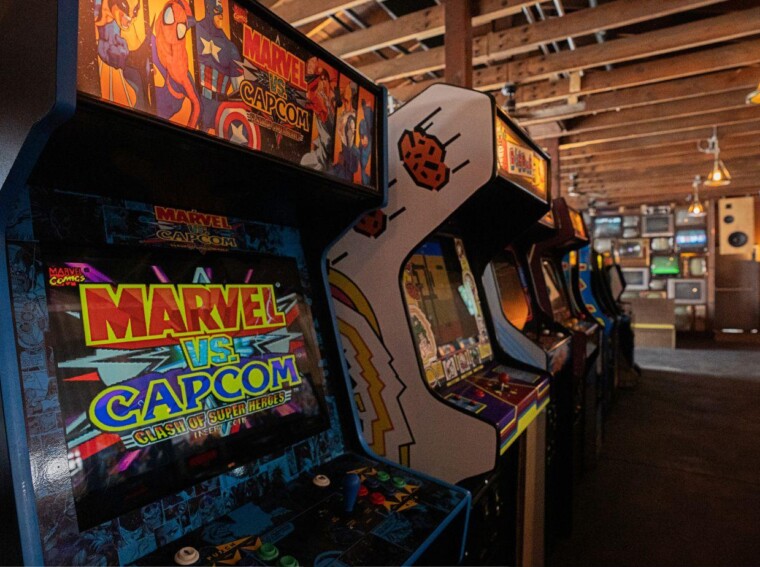
Walk past any retro arcade today and you’ll notice something odd. The games look primitive, yet the way people play them feels instantly familiar. That’s no accident. The design choices baked into those old cabinets weren’t artistic preferences—they were survival tactics dictated by hardware limits and a coin slot that needed feeding every few minutes.
Those constraints didn’t disappear when arcades faded. They migrated into consoles, PCs, and eventually phones, quietly shaping how modern games teach, reward, and challenge players. Understanding why arcade machines were built the way they were explains a surprising amount about game design today.
The Hardware Limits That Shaped Arcade Classics
Early arcade boards had almost no memory and modest processing power compared to anything running today. Designers couldn’t build sprawling worlds or lengthy cutscenes, so they leaned on tight, repeatable mechanics instead—movement, shooting, pattern recognition, and precise timing. Visuals had to be bold and legible too, since games competed for attention across noisy, crowded arcade floors.
That legibility requirement pushed developers toward large sprites, high-contrast colours, and unmistakable audio cues. Every flash and beep had a job: tell the player instantly what just happened. This wasn’t decoration. It was communication under pressure, built to work even when a player glanced at the screen for half a second.
How Scoring Systems Became Addictive Design Tools
Because cabinets couldn’t store long narrative states, developers needed another way to measure progress. Score became that measure. High-score tables gave players something to chase beyond simply finishing a game, turning mastery into a public, comparable achievement rather than a private milestone.
This score-chasing model still underpins huge chunks of the games industry, and its logic has spread well beyond traditional gaming. Retro arcade bars are drawing record bookings across the US, UK and Australia. Mobile leaderboard games borrow directly from cabinet scoring conventions. Competitive gaming venues in all three markets have reintroduced public high-score boards alongside digital equivalents. Australian online casinos with structured reward tiers and instant result feedback show how score-driven mechanics have been adapted into a modern digital experience.
Design commentary on arcade lineage repeatedly notes that mechanics borrowed from cabinets — timing, pattern recognition, immediate feedback — remain central to how developers build engagement today.
From Coin-Op Rooms To Digital Reward Loops
Coin-operated economics demanded short sessions, often under three minutes, or an operator lost money. That pressure forced designers to front-load difficulty just enough to hook new players while ramping challenge quickly enough to prompt another coin. The result was a difficulty curve tuned for retries, not endurance.
Modern roguelikes and arcade-inspired shooters echo this almost exactly. Fast restarts, punishing but fair difficulty spikes, and tight control loops all trace back to cabinet economics.Analysts tracking the retro gaming resurgence have pointed to renewed commercial interest in these design patterns, with the global retro console market reaching US$3.12 billion in 2024, a figure that underscores just how much appetite remains for arcade-style simplicity dressed in modern hardware.
Why Preservationists Still Study These Old Cabinets
For preservationists, arcade cabinets aren’t just nostalgic artefacts—they’re design documents. Studying how a machine handled limited memory, forced pacing, and instant feedback reveals decisions that still inform contemporary development. That’s part of why preservation work matters beyond sentimentality; it protects a working record of problem-solving under real constraints. Analysis of why older games still hold up against modern titles consistently points to the same qualities that made cabinets compelling: tight feedback loops, immediate consequences, and no padding.
Australia’s own arcade sector reflects this continued relevance, with the local arcade gaming market valued at US$82.42 million in 2024 and expected to keep growing over the next decade. As long as developers keep chasing tight, satisfying play loops, the lessons stamped into those old cabinets will keep echoing through new releases, whether players realise it or not.
